This is the main area for anyone looking to utilize this programs content to improve the peer to peer friendships, reduce bullying, and develop better leaders among your school’s (district’s) students. When it was “on tour” across the USA the demographic data was absolutely accurate, updated annually using the datasheets from PRB
Lately, I have been working on updating the assembly video segments to include newer imagery and to make use of pan and zoom options at higher resolution that were not available when this content was made into a DVD. (No promises as to when It will be ready to update.) While at it, I looked at the population data. It too needs to be updated. Demographic comparisons don’t change quickly, but they do shift. The last time I had generated the population stats was for a presentation in Laos in 2007. This shows the changes in the interim 11 years.  Since then, Nigeria’s population has continued growing rapidly. It is now too large to be represented accurately on-stage. Nations with over 400 people per square mile are too crowded to fit into the hoop areas allowed for the on-stage activity, and Nigeria has doubled in population since the early 1990s. [Germany, India and Vietnam are other examples] For Sub-Saharan Africa, there is no other nation with a population large enough to use. Instead, please add a student to stand outside that circle but to be counted as Nigeria. Count each person as representing 110 million people. ALSO, Russia is only entitled to one person in the simulation.
TESTIMONIALS
You as a presenter will gain confidence in the content by first viewing the many letters, nominations and awards evident on our TESTIMONIALS page
VIDEOS
VIDEOS provide a step-by-step annotated presentation designed explicitly to model best practices for delivering this content. Viewing, reviewing, learning to replicate the presentation as modeled through these videos will give you a feel for the flow. Importantly, they model phrasing to use to lead the students appropriately, especially while new at presenting. Example: in the final segment as to leaders, the inclusion of presidents in the USA will likely divert discussion into the realm of current politics. Valid, but impossible to handle in the time frames, and certain to preclude ever getting through to the main lesson concepts as to how to help their friends. The fact that the regular teacher is actively engaged lets them choose whether and when to continue supplemental content.
TEACHERS NOTES
You, your classroom session facilitators, and the teachers will need to download and review this 10-page PDF TEACHERS NOTES. These notes include the following and more:
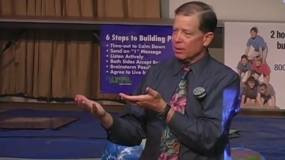
- ALL of the Teacher suggestions for Prior & After the assemblies, for either Older or Younger Students … as well as more details on the 6 Steps to Building Peace which are still drawing a few dozen hits per day on their former site addresses.
- Pages to use as overhead projection in the classrooms.
- Data tables for the simulation done on-stage, with comparable data on other nations.
- Comments on how teachers have previously expanded the content before and after its presentation.
- Dimensions of drip tubing made into hoops used during the simulation on stage
Additionally, you will need posters for the students to hold during the simulation game. The following map images print well to poster size and can then be laminated for repeated use.


Lastly, if your district chooses to print the program reminder cards,

Click on each of the paired source PDF files for use by a commercial printer to download:
POCKET CARDS C (PDF) and 2C1 (PDF).